Does Dog Poop Attract Flies? Yes — Here's What to Do
· Poo Squad
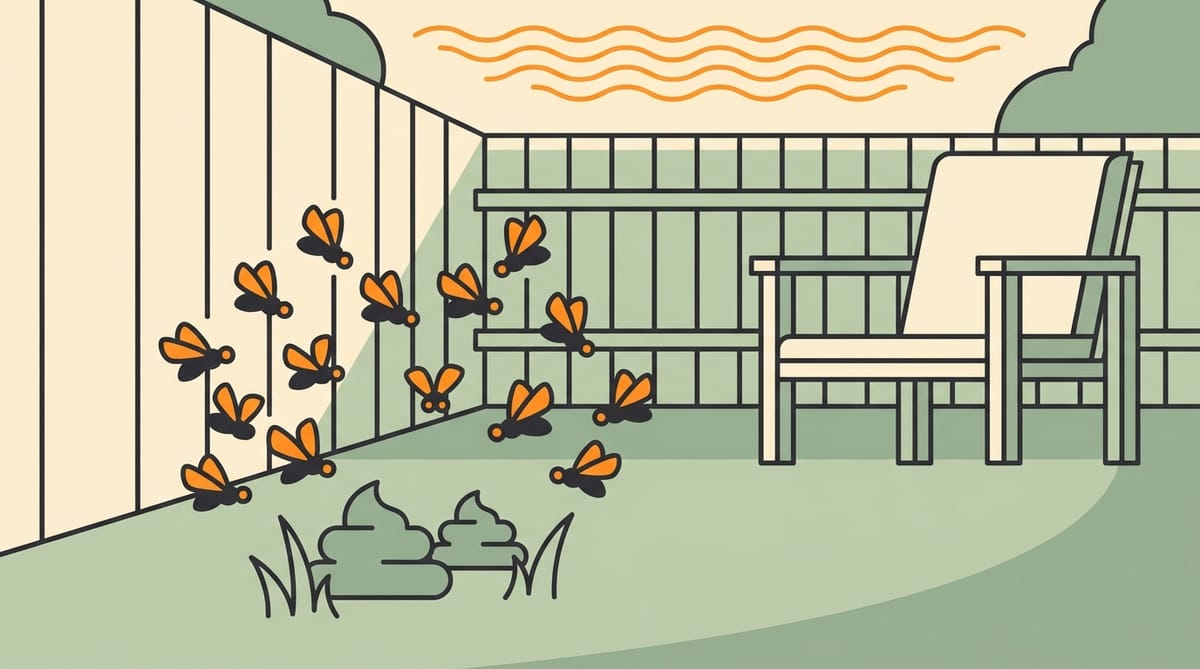
It's 85 degrees out. You finally drag the chairs onto the patio. Crack a drink. Sit down.
And the flies show up. A few. Then a lot. Then a cloud.
You glance at the yard and yep — there it is. The pile your dog left this morning. Maybe two. Maybe a week's worth in that one shady corner you've been avoiding.
So here's the honest answer: yes, dog poop attracts flies. Fast. Faster than most people realize. And once they show up, they don't just hover — they multiply.
Here's exactly how that happens, why it matters, and what actually works to stop it.
How Fast Do Flies Find Dog Poop?
Minutes. Not hours. Minutes.
When it's warm out (think 75°F and up), flies can locate a fresh pile within minutes of your dog dropping it. They smell the gases. They follow the trail. They land.
That's not us being dramatic. That's just how a fly works. Their entire job description is "find something rotting, eat it, lay eggs in it." Dog poop checks all three boxes.
The hotter and more humid it gets, the faster they arrive. A 90-degree July afternoon is a fly's dream commute.
One Pile, 150 Maggots
Here's the part most people don't know.
A single female house fly can lay up to 150 eggs in one pile of dog waste. Those eggs hatch into maggots in under 24 hours when it's warm.
So a pile you leave Saturday morning isn't just one pile by Sunday. It's a nursery.
If you've ever scooped what looked like a normal poop and seen it moving — congrats, you've met the next generation. We've written a whole separate guide on maggots in dog poop because it happens way more than people admit.
And those maggots? They grow into adult flies in about a week. Then those flies lay more eggs. The math gets ugly fast.
Why Flies Love Dog Poop Specifically
A few reasons it's basically fly heaven:
- It's warm. Fresh waste holds heat from your dog's body. Flies hone in on that.
- It smells. Ammonia, sulfur compounds, decomposing protein — fly perfume.
- It's soft. Easy to land on. Easy to lay eggs in. Easy for maggots to feed in.
- It's nutrient-dense. Dog diets are heavy in protein and fat. Maggots thrive on that.
Cow manure and horse manure attract flies too. But dog poop is in your backyard, ten feet from where your kid plays. That's the difference.
It's Not Just Annoying — It's a Health Issue
Flies don't politely visit one pile and leave. They bounce. From the poop, to your patio table, to your hamburger bun, to your dog's water bowl, to the rim of your kid's juice cup.
And they bring stuff with them.
Research shows flies can pick up and carry pathogens like Salmonella and E. coli on their bodies, including from contaminated waste. House flies have been documented carrying more than a million bacteria on a single body.
Dog poop itself can also carry roundworm, hookworm, giardia, and parvo. When flies use it as a launchpad, those contaminants spread. The CDC lists picking up dog waste promptly as a basic step to prevent zoonotic disease.
It's not panic. It's just one more reason that pile in the back corner of the yard isn't actually "out of the way."
The Single Most Effective Fix
Scoop fast. That's it. That's the headline.
Every fly problem connected to dog poop comes back to one thing: how long the waste sits there. The longer it sits, the bigger the fly party gets. If you can pick up waste within an hour or two — ideally same-day, every day — flies don't get a chance to lay eggs in it.
Once you're a few days behind, you're not solving a fly problem anymore. You're trying to evict squatters.
For most people, "scoop every single day" isn't realistic. Life happens. That's exactly why weekly residential scooping exists — a pro shows up, clears the yard, and resets the clock before the flies turn into maggots turn into more flies.
What to Do With the Bag After You Pick Up
Picking it up is half the job. Where you put it matters too.
A loose plastic bag tossed in an open trash can next to your garage? That's just a relocation. The flies follow.
Better setup:
- Use a bin with a real, sealed lid — not a flap.
- Double-bag if it's going to sit more than a day in summer heat.
- Keep the bin in shade if possible. Sun-baked trash bins smell ten times worse.
- Take it to the curb on collection day, every collection day, no skipping.
If your city allows it, a dedicated dog waste bin (the kind that vents or seals tighter than a kitchen bin) is worth the small investment.
What Actually Works in the Yard
Once the pickup routine is dialed in, a few small things help in the yard itself.
Hose down hot spots. Wherever your dog "goes" most often, rinse it down once a week. Residual scent draws flies even after the visible pile is gone. A garden hose handles 90% of that.
Light dusting of agricultural lime. A thin layer of pelletized lime on the worst zones raises soil pH and makes the area less hospitable to fly larvae. Don't dump it like flour — a light dusting is plenty.
Vinegar spray on hard surfaces. Equal parts white vinegar and water in a garden sprayer. Hit the patio, the concrete walkway, the spot by the back gate. It neutralizes the ammonia smell flies are tracking.
Fly-repellent plants. Basil, marigold, lavender, mint. Won't single-handedly solve a fly problem, but they help and they're dog-safe in normal yard amounts.
None of this matters if the poop is still there. The yard treatments support the pickup. They don't replace it.
What Doesn't Work (Don't Bother)
A few things you'll see suggested online that we'd skip:
- Letting it "dry out" in the sun. Yes, dried poop attracts fewer adult flies. But maggots already living inside it don't care. And rain rehydrates the whole thing.
- Bleach in the yard. Kills grass, runs off into storm drains, won't fix the fly cycle.
- Strong air fresheners on the patio. Covers the smell for you. Does nothing to the flies, who use chemical signals you can't mask.
- Leaving piles for "rain to wash away." The rain doesn't dissolve dog poop — it spreads it. We covered what actually dissolves dog poop in a yard in a separate post, and "rain" isn't on the list.
The HOA and Neighbor Factor
One pile in one yard is your problem. A neighborhood of unscooped yards is everyone's problem — because flies don't respect property lines.
If your neighbor's yard has been sitting for a month, your patio is going to host their flies. It's not your imagination.
Some HOAs and cities have rules about this. In a lot of places, leaving it in the yard isn't just gross — it can be illegal, especially if it's spilling into a shared space or drainage area.
You don't have to be the yard-cop on your block. But if you've ever wondered why summer feels extra fly-heavy in your neighborhood — that's usually why.
When to Just Hand It Off
If any of these sound like your house, professional scooping pays for itself in fly-prevention alone:
- More than one dog.
- A yard you don't get to walk every day.
- Summer temps regularly over 85°F.
- Kids playing in the yard.
- A patio you actually want to use.
- That one back corner where things "pile up" (literally).
We scoop every visible pile, bag and remove the waste, and reset your yard on a schedule that beats the fly clock. No more bag-relocation. No more cloud over the deck.
FAQ
How long does it take flies to find dog poop?
In warm weather (above 75°F), flies can locate a fresh pile within minutes. The hotter and more humid it is, the faster they arrive. By the one-hour mark in summer, eggs may already be in the pile.
Do flies lay eggs in dog poop?
Yes. A single female house fly can lay up to 150 eggs in one pile of dog waste, and the eggs typically hatch into maggots within 24 hours in warm weather. That's why a yard that hasn't been scooped in a few days can suddenly have a fly explosion.
Will picking up dog poop daily really get rid of the flies?
For most yards, yes — same-day pickup breaks the egg-to-maggot-to-fly cycle before it starts. Pair it with sealed-lid trash storage and a weekly rinse of high-traffic spots and the fly population usually drops fast.
Are flies on dog poop dangerous?
They can be. Flies move between waste and the places humans live — patio tables, food, drinks, water bowls. They can carry bacteria like Salmonella and E. coli on their bodies and spread parasites present in the waste. It's not common to get sick from a fly landing once, but consistent exposure in a fly-heavy yard is a real hygiene issue.
What kills fly larvae in dog poop?
Removing the pile entirely is the only reliable fix — bag it, seal it, take it out. Once you see maggots, home remedies (lime, vinegar, salt) only partly work and they don't address the next batch of eggs. Scooping immediately, every time, is the real "kill switch."
Want Your Yard Back?
You shouldn't have to sit on the patio waving flies off your sandwich. And you definitely shouldn't have to find a moving pile out by the fence.
We handle the dirty part on a schedule — weekly, twice-weekly, whatever your yard needs — so the flies never get a foothold. Find your local Poo Squad crew and we'll take it from here.