Does Dog Poop Attract Raccoons? Here's the Truth
· Poo Squad
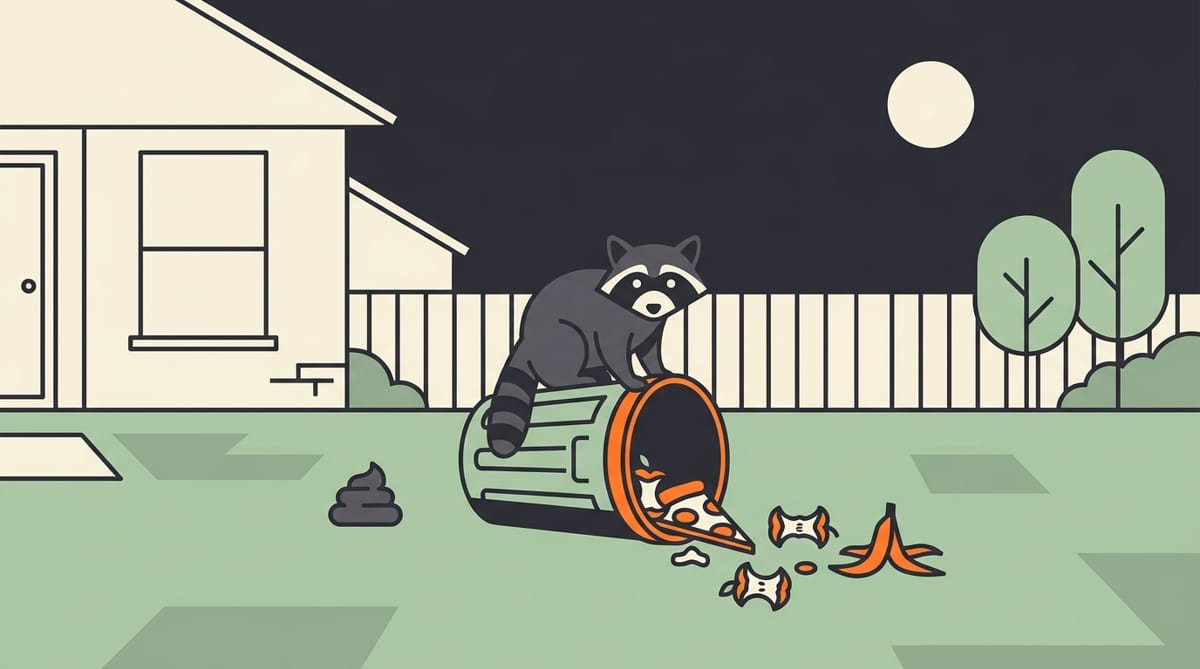
You step onto the patio with morning coffee and spot the evidence. Trash tipped sideways. A planter knocked over. Tiny muddy paw prints on the deck. Something's been visiting overnight. And the yard? Still loaded with last week's dog poop you swore you'd get to.
Coincidence? Not really.
Let's talk about what's actually drawing raccoons in — and why the answer isn't quite what most people assume.
The Short Answer
Yes. Dog poop can attract raccoons. Not because raccoons love eating it (most don't), but because a yard with uncollected waste signals one thing to a raccoon: this is a messy, unmonitored, food-rich spot. Worth checking out.
Raccoons are opportunists. They sniff around for easy calories, and a yard that smells like organic stuff sitting out — poop, trash, fallen birdseed, pet food — gets put on their nightly route. Once they're regulars, the dog waste itself becomes part of the buffet.
So Do Raccoons Actually Eat Dog Poop?
Some do. Some don't. It depends on the raccoon and what else is around.
If your dog's food is rich and not fully digested, the waste still carries calories. A hungry raccoon — especially a young one — will absolutely take that meal. Raccoons in lean times have been documented eating just about anything organic, including pet waste.
But raccoons aren't picky guests. They came for the poop, sure. They'll also rip into your trash, scarf the cat food on the porch, and casually shred the bird feeder. The poop is the doorbell. Your yard is the dinner party.
Why a Messy Yard Acts Like a Lighthouse
Raccoons rely on smell more than sight. A single uncollected pile gives off odor for days, especially in warm weather. Three or four piles? You've built a beacon.
And raccoons remember. Once a yard becomes a known food stop, they come back. Same yard. Same time of night. Sometimes with friends. Sometimes with babies trailing behind in the spring.
That's the part most homeowners don't realize. You're not just dealing with one curious raccoon. You're training a route.
The Bigger Problem: What Raccoons Bring With Them
Forget the knocked-over trash for a second. The real reason you don't want raccoons living in your yard is what's inside their poop.
Raccoons commonly carry raccoon roundworm (Baylisascaris). Infected raccoons can shed millions of eggs in a single pile of feces. Those eggs sit in soil, grass, and decks. They become infectious within two to four weeks. And they're nasty.
Heat kills the eggs. Most household chemicals don't. That's why the CDC recommends removing raccoon feces fast — before the eggs become infectious — and treating contaminated surfaces with boiling water if needed.
Your dog can pick that up by sniffing or eating the wrong patch of grass. Kids playing barefoot, the same. It's not common. It's also not the kind of risk you want to roll the dice on every summer.
Curious what raccoon poop even looks like compared to your dog's? We made a backyard animal poop identification guide for exactly that question.
Raccoons Don't Show Up Alone
A poop-filled yard isn't just on the raccoon radar. The same scent profile pulls in:
- Flies and the larvae that come a day or two later
- Rats and mice nosing around for protein
- Possums working the same buffet
- Skunks (and yes, that introduces its own set of problems)
- Coyotes in suburbs that border greenbelts or open land
None of those guests are doing your lawn any favors. And none of them clean up after themselves.
Signs Raccoons Have Made Your Yard a Stop
You won't always catch them in the act. They're nocturnal and quiet when they want to be. Look for these clues:
- Trash cans repeatedly knocked over or pried open
- Small five-toed handprints in mud or on the deck
- Dog waste that's been picked at, scattered, or moved
- Bird feeders empty in the morning when they were full at sundown
- Their own droppings — dark, tubular, often piled in the same spot (raccoons use "latrines")
- Damaged shingles, fascia, or attic vents (they nest where they can)
If you're seeing two or more of those, you've got regulars.
How to Stop Attracting Them — Without Trapping Anything
Here's the good news. You don't need a wildlife removal service for most of this. You just need to make your yard a less interesting menu.
1. Pick up dog waste daily
This is the boring answer, and it's also the answer. Fresh poop has less time to broadcast scent. Old poop is what builds the route.
If "daily" sounds like a fantasy with your schedule, that's where we come in. A weekly residential pooper scooper service keeps the yard reset before the smell builds and before the wildlife starts treating it as a recurring stop.
2. Secure your trash
Bungee cords. Locking lids. A storage shed if you've got one. Raccoons are clever — they will figure out a basic latch — but they give up on anything that's actually a hassle.
3. Stop feeding pets outside overnight
Cat food on the porch is a raccoon magnet. Bring bowls in at sundown.
4. Clean up under bird feeders
Fallen seed feeds rodents. Rodents feed raccoons. Sweep weekly or move feeders away from the house.
5. Cut off easy water
Empty kiddie pools. Cover rain barrels. Fix dripping outdoor spigots. Water sources are part of why a yard becomes a stop.
6. Add a motion light
Cheap, effective, doesn't hurt anyone. A sudden flood of light interrupts raccoon comfort and they tend to move on. Same with a motion-activated sprinkler.
7. Treat existing poop spots
If certain corners have been "the spot" for months, the soil's holding onto smell. A safe enzyme treatment helps. We wrote up the safe options in what dissolves dog poop in your yard.
What About Just Trapping or Repelling Raccoons?
You can. We don't usually recommend leading with that.
Trapping removes the raccoon currently in your yard. It doesn't remove the reason raccoons came in the first place. Take one out, another finds the same poop pile and trash can a week later. Same route. Different raccoon.
Predator-urine repellents and ammonia rags can help short term, but they fade fast and most homeowners stop reapplying. The reliable fix is making the yard boring. No food. No water. No old poop. No reason to come back.
And if you live somewhere with strict regulations on what you can do with trapped wildlife — most places do — it's worth a call to local animal control before you buy a trap. Worth a separate read: is it illegal to leave dog poop in your yard. Same basic rule applies to wildlife waste in many cities — clean it up, dispose of it properly.
What If Raccoons Already Pooped in Your Yard?
Treat raccoon feces seriously. Don't kick it. Don't power-wash it (that aerosolizes the eggs). Don't let kids or dogs near it.
Use gloves and a disposable bag. Double-bag and put it in the outdoor trash. If it's on a deck or paved surface, the CDC's prevention guidance says boiling water is the most reliable way to kill any eggs that may have started cooking. Wash your hands hard afterward.
If you find what looks like a raccoon latrine — repeated piles in the same spot, often in a corner, on a flat roof section, or at the base of a tree — it's worth getting wildlife control involved. Latrines mean a den is nearby.
The Long Game
Most homeowners don't realize how interconnected this stuff is. Uncollected dog poop pulls flies. Flies bring lizards. Open trash brings raccoons. Raccoons leave roundworm in the grass. Now the dog is the one bringing problems back into the house.
The fix isn't dramatic. It's just consistent. A yard that gets scooped, has its trash locked down, and doesn't leave food out overnight stops being a stop on the route. Wildlife moves on within a couple weeks.
If you'd rather not be the one doing the scooping, that's literally why we exist. Poo Squad pros hit the yard weekly, twice-weekly, or wherever your dog volume lands. We bag and haul everything off. Your yard resets every visit. Wildlife loses interest. Your weekend frees up.
FAQ
Will raccoons eat dog poop if there's no other food around?
Some will. Raccoons are opportunists. In lean conditions or harsh winters, they'll take any organic calories — including poorly digested dog waste. The smarter move is to make sure your yard isn't the easiest option in the neighborhood.
Does fresh dog poop attract raccoons more than old poop?
Old poop puts off more long-distance smell, which is what builds the route in the first place. Fresh poop attracts flies fast but takes a little longer to register on a raccoon's radar. Either way, the only safe answer is to pick it up before it sits.
Can my dog get sick from a yard raccoons have visited?
Yes — though it's not super common. Raccoon roundworm eggs can survive in soil for a long time. Dogs that sniff, lick, or eat contaminated grass can pick it up. Monthly parasite prevention from your vet covers most of the risk. Keeping the yard clean of both raccoon and dog waste keeps the odds low.
Do raccoons attract more raccoons?
Effectively, yes. A successful raccoon revisits and brings young along in the spring. Multiple raccoons working the same yard also leave scent trails for others. Once you've got "regulars," you usually have more on the way.
How long does it take for raccoons to stop coming once I clean up?
Usually two to three weeks of consistent cleanup — no waste sitting, locked trash, no outdoor pet food. Their route shifts. They find easier yards. Yours stops being on the map.
The Bottom Line
Does dog poop attract raccoons? Yes — sometimes directly, but mostly by turning your yard into a place that looks worth investigating. The poop is the welcome mat. Everything else they cause is the real headache.
Clean yard, locked trash, no pet food outside. That's the whole prevention strategy. The first one is the hardest to keep up with, and it's also the one we handle for thousands of households every week.
Ready to take the chore — and the wildlife — off your plate? Find a Poo Squad near you. We scoop. You get the yard back.