Does Dog Poop Attract Rats? The Honest Answer
· Poo Squad
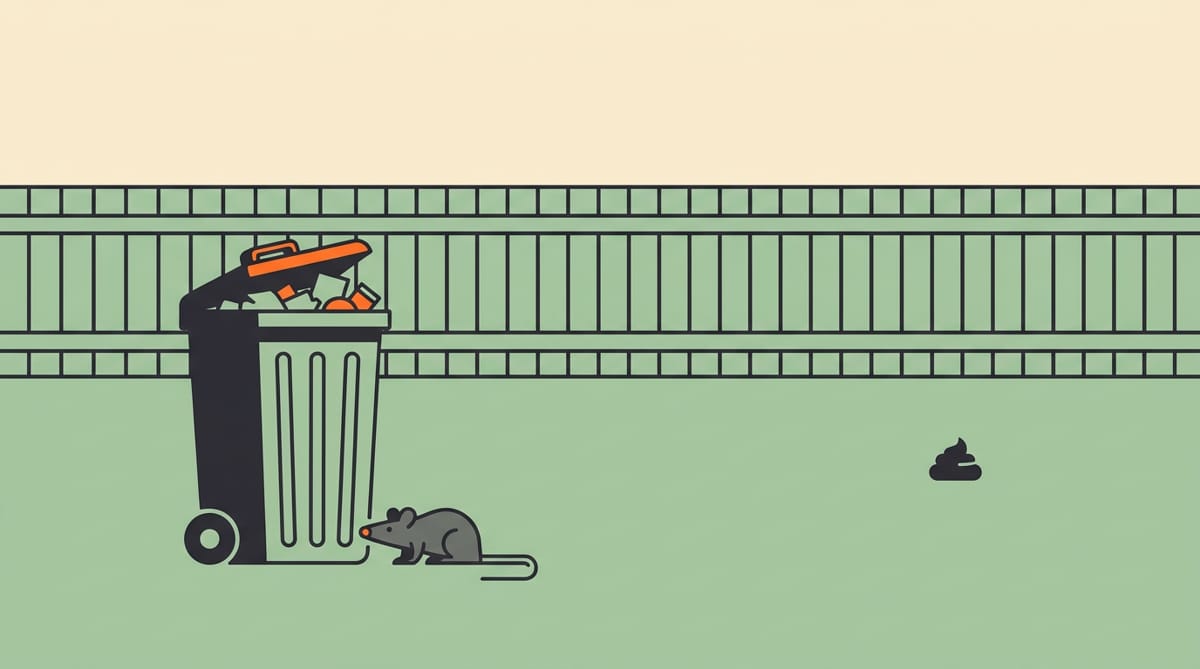
You spotted a rat in your yard. Or maybe a neighbor mentioned it. Either way, your first thought went straight to the pile your dog left near the fence yesterday.
So. Is dog poop pulling rats into your yard? Or is that just an internet rumor?
Short version: it can. But it's almost never the whole story.
We scoop yards for a living. We've seen what really happens when poop sits — and what actually shows up to eat it. Here's the truth, minus the panic and the pest-control sales pitch.
The Short Answer: Yes, Dog Poop Can Feed Rats
Dog poop isn't pure waste. It's loaded with undigested fat, protein, and partially-digested kibble. To a rat, that's a meal.
Rats are opportunists. If easier food is around — trash, bird seed, fallen fruit, pet food bowls left outside — they'll go for that first. If it's not, the pile by your fence will do.
That's the part most homeowners get wrong. Dog poop isn't a rat magnet on its own. It's one item on a long buffet menu.
Why Dog Poop Attracts Rodents
Three reasons rats might pick your yard:
1. The smell. Rats have a keen sense of smell. Decomposing waste tells them food is here.
2. The nutrition. Dogs don't fully digest their food. Whatever didn't get absorbed ends up in the pile.
3. The shelter that comes with a messy yard. If poop is sitting around, odds are other stuff is too — overgrown grass, wood piles, gaps under sheds. Those are the real prize.
That last one matters most. Rats won't move into a yard just for poop. They move in for cover.
But Wait — Some Experts Disagree
Here's where it gets interesting.
Chicago's own street signs say "Dog waste attracts and feeds rats," and pest control companies have been saying the same thing for decades. But when researchers actually tested it, the picture got more complicated.
A 2021 study in the Journal of Urban Ecology set out to test that exact claim. Researchers compared rat complaints across Chicago against garbage complaints, restaurants, building age, and dog waste complaints. Dog waste did track with rat complaints, but the effect was smaller than restaurants and garbage. The city logged 6,631 dog waste complaints in that period against 61,397 garbage complaints. The researchers concluded dog feces is likely less important as a rat food source than garbage.
Other urban ecologists push back harder. Steve Sullivan at the Peggy Notebaert Nature Museum has noted he's never seen a peer-reviewed study confirming rats prefer dog feces. The University of California's Integrated Pest Management Program puts garbage, pet food, compost, and birdseed at the top of the rat-food list — not dog poop.
So what's the answer?
Both sides are right. Rats will eat dog poop if that's what's around. They prefer tastier food when they can get it. Take the easy food away and dog poop becomes a fallback.
Translation: if your yard is full of dog poop AND you have an open trash bin AND a bird feeder dripping seed, you've got a rat problem brewing. The poop is part of it, not all of it.
The Real Risk: It's Not Just About Rats
Honestly? Whether dog poop pulls rats or not, it's still a problem.
Dog waste attracts flies. It attracts other dogs (who roll in it — gross, but predictable). It kills patches of grass. It washes into storm drains when it rains. And it carries parasites and bacteria that can stick around in your soil for over a year.
If rats do show up, the stakes go up fast. Per the CDC, rats can carry serious diseases like hantavirus and leptospirosis, both of which can spread to humans through urine, droppings, or contaminated soil. Add a kid playing in the yard or a dog sniffing around, and that's a real concern.
This is one reason what actually happens when dog poop sits in your yard is more serious than people think.
How to Stop Rats From Hanging Around Your Yard
Good news. The fix isn't complicated. It's just consistent.
Scoop daily — or pretty close to it
The single most effective move is also the simplest. Scoop your yard every day, or at least every other day. No pile, no buffet.
If you have multiple dogs or a big yard, daily scooping is a real commitment. That's the reality. Skipping a few days is when the smell builds and the food source becomes obvious to anything with a nose.
Don't compost or bury dog poop
Compost piles are rat paradise — food, warmth, cover. Adding dog waste makes it worse. Buried poop doesn't disappear either. It just feeds whatever digs.
If you've been wondering what dissolves dog poop in the yard, the honest answer is: nothing safe and fast. Removing it manually is still the best option.
Seal the bin
Loose bags by the curb are a rat snack. Use a sealed pet-waste container or a sturdy trash can with a locking lid. Empty it on trash day, not whenever you remember.
Take away the other attractants
This is the part most people skip. Cleaning up poop won't matter much if the rest of the buffet is still open.
Bring pet food bowls in at night. Clean up under bird feeders. Keep grills clean. Trim back overgrown shrubs and clear out wood piles, leaf litter, and anything else that gives rodents cover near your house.
Oregon State University's Extension Service puts it plainly: removing food, water, and shelter is the only long-term fix. Traps and poison are band-aids if the yard is still inviting.
Watch for entry points
Rats can squeeze through a hole the size of a quarter. Walk your foundation and look for gaps near pipes, vents, and the bottom of garage doors. Seal what you find.
How to Tell If You Already Have a Rat Problem
Common signs:
Dark, oily smudges along walls or fences. Droppings about the size of a grain of rice — usually black, sometimes shiny. Gnaw marks on wood, plastic, or hose bibs. Greasy runways through tall grass. The sound of scratching in walls or attic at night.
Not sure if what you're seeing is rat poop or something else? Our guide to figuring out whose poop is in your yard covers the most common backyard offenders.
When DIY Scooping Isn't Enough
Some yards are easy. One dog, small lawn, a few minutes with a bag, done.
Other yards aren't. Three dogs and a quarter acre? A long winter pile-up you keep meaning to deal with? A rental property where the tenants stopped scooping months ago?
That's where we come in. Poo Squad will scoop your yard for you on a regular schedule — weekly, every other week, or one-time cleanups for the situations that got out of hand. We bag it, haul it, and gate-check it so your dog stays in.
No more excuses about why this week's scoop didn't happen. No more wondering if you're feeding the neighborhood rat population. Just a clean yard, every visit.
The Bottom Line
Does dog poop attract rats? Sometimes. It depends on what else is sitting in your yard, what else is in your neighborhood, and how often the poop is left to ferment in the sun.
Either way, leaving it doesn't help. The rats are one reason. The smell, the parasites, the dead grass, and the storm drain runoff are the others.
Scoop it, seal it, and clean up the rest of the buffet. That's the whole strategy.
FAQs: Dog Poop and Rats
How long does it take for dog poop to attract rats?
Faster than you'd think — a day or two in warm weather is enough. Heat and moisture speed up the smell, which is what draws rodents in. In cold weather it takes longer, but rats are still hunting all winter.
Do rats actually eat dog poop or just sniff around it?
They'll eat it. Dog waste contains undigested fat and protein, and rats aren't picky when food is scarce. When tastier options are around — garbage, pet food, birdseed — they'll usually go for those first.
Will picking up poop alone get rid of rats?
Probably not on its own. Scooping removes one food source, but rats are usually drawn in by a combination of food, water, and shelter. You'll need to clean up the yard, seal trash bins, and remove cover (wood piles, overgrown brush) to actually push them out.
Is dog poop dangerous to humans even without rats?
Yes. Dog waste can carry roundworms, hookworms, giardia, and bacteria like E. coli and salmonella. Many of these can survive in soil for months. Kids and other dogs are most at risk because they're closest to the ground.
Should I use rat poison if I see rats in my yard?
Not without thinking it through. Poisoned rats can be eaten by your dog, cat, or local wildlife (hawks, owls), and the poison passes up the food chain. Most extension services recommend snap traps and removing attractants instead. If you're set on chemical control, hire a licensed pest professional who can place baits safely.
Ready to Stop the Buffet?
You can spend your Saturday with a bag and a scoop. Or you can hand it off and get the yard back.
We cover 23+ cities across the country, and we're growing. Find your local Poo Squad and see if we serve your area. First scoop's usually the biggest — we'll take care of it.