Does Dog Poop Attract Snakes? The Honest Answer
· Poo Squad
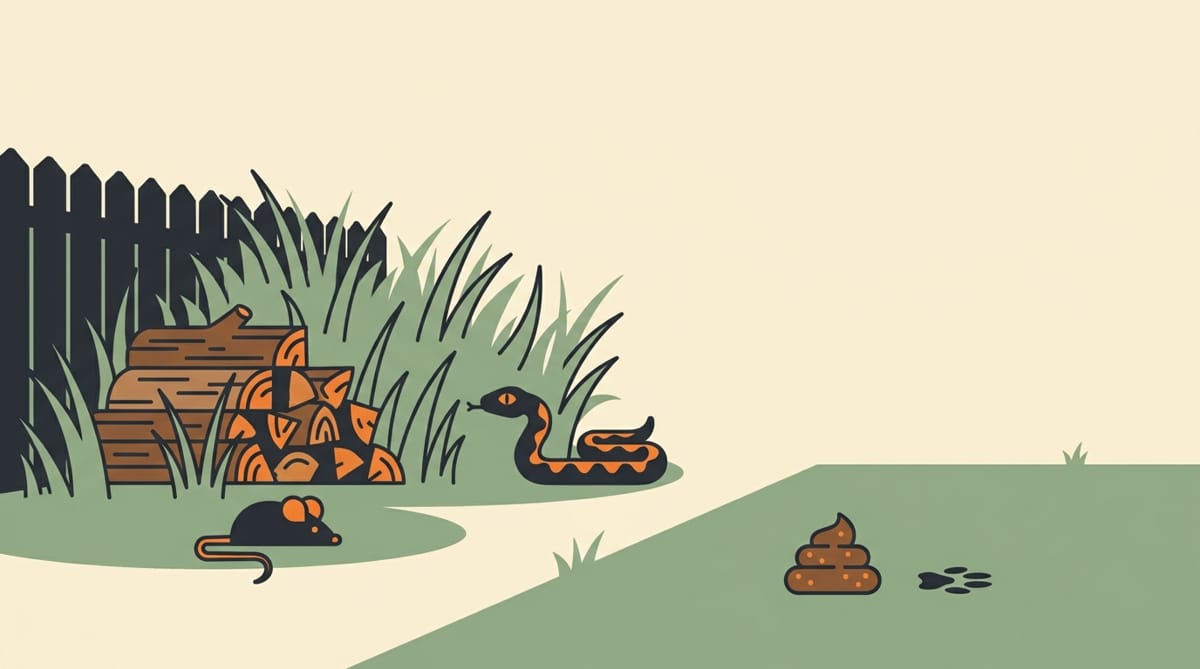
You spotted something long and gray slip behind the AC unit. Now you're standing on the patio holding a coffee, googling on your phone, wondering if last week's missed scoop has anything to do with it.
Short answer? Snakes aren't sniffing out your dog's poop. They're not interested in the poop itself.
But they are very interested in what shows up *because of* the poop.
That's the part most articles skip. Dog waste in your yard sits at the start of a short food chain that ends with a snake patrolling your fence line. Once you see how that chain works, the fix becomes pretty obvious. And the fix is doable.
So, Do Snakes Eat Dog Poop?
No. Snakes are carnivores. Pure ones. They eat rodents, frogs, lizards, eggs, insects, and other small animals. Feces isn't on the menu.
Some online claims say dog poop *deters* snakes — that the scent of a predator scares them off. There's no real evidence for it. Snakes don't avoid yards because a dog lives there. They avoid yards that don't feed them.
If you've ever seen a snake slide right past a barking dog and disappear into a hedge, you already know.
The Real Chain: Poop → Rodents → Snakes
Here's what's actually happening in your yard.
Dog poop is full of undigested food — corn, rice, fats, protein bits. To a rat or mouse, that's free dinner. Rodents nose right in.
One uncollected pile becomes a feeding spot. Three or four piles become a route. That route gets walked nightly. Rodents leave scent trails — urine, droppings, oils from their fur — along the fence, the shed, the foundation.
Snakes follow scent trails. That's how they hunt. A garter snake or rat snake reading your yard's chemistry sees a buffet, not a dog's territory.
So the poop doesn't pull the snake. The poop pulls the rats. The rats pull the snake.
The chain is short. And once it's running, it runs every night.
Why This Hits Hardest in May Through August
Snakes wake up hungry. After winter brumation — basically reptile hibernation — most North American snakes ramp up activity in late April and peak through August.
That timing overlaps with a few other yard things:
- Grass grows tall, giving snakes cover
- Mulch and shrubs hold moisture and warmth
- Rodent populations boom in late spring
- People grill outside more, dropping crumbs and grease
- Dogs are outside more — meaning more poop, more often
Late May to early July is when the chain runs at full speed. It's also when most homeowners notice the snake. By then, the food web has been running for a while.
What Else Dog Poop Pulls In
It's not just rats. Uncollected dog waste also attracts:
- Flies and maggots — laying eggs in fresh piles within hours
- Cockroaches — feeding on the same undigested matter
- Mice and voles — same reason as rats
- Raccoons and opossums — opportunistic scavengers
- Ticks — riding in on the small mammals that show up
Every one of those is a snack to something larger. Frogs eat the bugs. Snakes eat the rodents. Hawks and owls eat the snakes. Your yard becomes a tiny ecosystem nobody asked for.
If you want a sense of what's been visiting overnight, the backyard animal poop identification guide walks through what raccoon, opossum, rat, and snake droppings actually look like.
Does the Smell of Dog Poop Repel Snakes?
This one comes up a lot. The short version: no.
Snakes don't have a strong sense of smell the way mammals do. They use a flicking tongue to pick up chemical particles from the air and ground, then read them with an organ in the roof of the mouth. Dog poop doesn't register as a threat in that system. It just registers as background.
Some people swear by ammonia, sulfur, or mothballs as snake repellents. The data on those is also weak. Mothballs especially — they're a toxic mess for pets, kids, and groundwater, and they don't reliably move snakes anyway.
The thing that *actually* moves snakes out of a yard is removing what feeds them. Which brings us back to the poop.
How Long Until Snakes Stop Coming After Cleanup?
Once you clear the dog waste and the rodent population thins out, snakes lose interest fast. Usually within two to four weeks.
That timeline depends on a few things:
How long the buildup ran. A yard with months of uncollected poop has a thicker rodent footprint than one with a week or two of slip-ups. Thicker footprint, longer reset.
Whether neighbors are also scooping. If the rodents just walk thirty feet next door, snakes keep cruising your shared fence. A clean yard helps. A clean block helps more.
Other food sources. Bird feeders that scatter seed, pet bowls left out overnight, open compost bins, and accessible trash all keep rodent traffic alive even after the poop is gone.
Clean the yard, secure the food, and the chain breaks. Snakes follow the food.
What About Old, Dried-Out Poop?
Old poop is the part most people miss. It still smells to a rat. It still has fat and protein traces.
Dried poop also breaks into small pieces that get tracked into mulch, grass clippings, and flower beds. Rodents poke around the residue. The chemical signature your yard puts out doesn't reset until that material is actually gone.
For yards with months of buildup, a deep one-time scoop helps. After that, the rinse trick described in what dissolves dog poop in your yard can help clear the bits stuck in grass.
The full reset takes about a week of consistent daily cleanup. After that, your yard stops broadcasting "free dinner."
Are All Snakes a Problem?
No. Most yard snakes in the US are harmless. Garter snakes, rat snakes, king snakes, and racers are common — and they actually help by eating rodents.
The ones to take seriously, depending on where you live:
- Copperheads — Southeast and lower Midwest, brown hourglass pattern
- Cottonmouths / water moccasins — Southeast wetlands
- Rattlesnakes — across most of the country, especially the South and West
- Coral snakes — Gulf states, red-and-yellow banding
If you have a dog, snake awareness matters. The AKC's guide to snake safety for dogs covers identification, snakebite signs, and what to do at the vet. Worth a read before peak season.
The Cleanup Habits That Break the Chain
You don't need a major yard overhaul. You need a few habits that stay consistent.
1. Scoop every day, not every week
One day of poop equals one rat meal. Three days equals a route. Daily cleanup keeps the chain from forming in the first place.
2. Cut the grass short and trim the edges
Snakes hide in tall grass. Rodents hide in tall grass. A short lawn — three inches or less — gives both fewer places to settle.
3. Clear the perimeter
Stack firewood off the ground. Pull old debris piles. Trim shrubs so there's a six-to-twelve-inch clear gap between ground and foliage. Snakes love covered runs along fence lines.
4. Move pet food and water bowls inside at night
This is the single best rodent-prevention move that costs nothing. Pet food draws rats faster than dog poop does.
5. Use a sealed bin for waste
Don't leave bagged poop sitting in an open trash can. The smell still pulls flies, which still pull other things.
"But I Can't Scoop Every Day"
Most people can't. It's not a moral failing — it's a calendar. Work runs long. Kids run longer. The dog still poops twice a day.
That's the gap a weekly residential pooper scooper service fills. Pros come out on a set schedule, scoop everything, double-bag, and haul it away. Your yard never builds the chemical signature that triggers the chain in the first place.
For some homeowners, that's also where the regulatory angle comes in. Many cities now fine homeowners for accumulated waste — see is it illegal to leave dog poop in your yard for the specifics. Snakes are a yard problem. Pet waste ordinances are a wallet problem. Same fix.
What to Do If a Snake Is Already Hanging Around
Don't grab a shovel. Don't poke at it. Most snakes will leave on their own if you back off and give them space.
Steps that work:
- Identify from a distance if you can — color, pattern, head shape
- Keep kids and dogs inside until the snake moves on
- Spray the snake from far away with a garden hose — most snakes hate it and leave
- Call your local animal control or a licensed wildlife removal company if it's venomous or won't go
For prevention going forward, the CDC's rodent prevention guidance doubles as snake prevention. Take away the rodent attractants, and the snake doesn't have a reason to patrol.
Quick Summary
Dog poop doesn't attract snakes directly. It attracts rats, mice, flies, and other small animals — and *those* attract snakes. The chain is short, and it runs hardest from May through August.
Break the chain by:
- Scooping daily so the food source disappears
- Keeping grass short and shrubs trimmed up off the ground
- Pulling pet food bowls in at night
- Clearing debris piles and stacked materials along the fence
Do those four things and the rodents thin out. The snakes lose interest. Your yard becomes a yard again.
FAQ
Do snakes eat dog poop?
No. Snakes are strict carnivores and eat rodents, frogs, lizards, eggs, and insects. Dog feces is not a food source for them.
Does dog poop keep snakes away?
No. There's no evidence that dog waste deters snakes. If anything, the rodents that feed on uncollected poop draw snakes closer.
What attracts snakes to a yard?
Three things: food (rodents, frogs, insects), shelter (tall grass, mulch, debris piles, woodpiles), and water (puddles, plant saucers, pet bowls). Remove those and snakes move on.
How long after cleaning up dog poop will snakes stop coming?
Usually two to four weeks. The rodent population needs to thin out first. Consistent daily cleanup plus securing other food sources speeds that up.
Are baby snakes more attracted to yards than adults?
Sometimes. Juvenile snakes hunt smaller prey — large insects, slugs, baby rodents — and overgrown yards with lots of bug activity can draw them. The same yard hygiene that handles adult snakes handles juveniles too.
You Don't Have to Scoop Alone
If the daily scoop has slipped — life, kids, work, all of it — Poo Squad is the easiest way back to a yard that doesn't broadcast "free dinner." We come out on a regular schedule, clear every pile, double-bag, and take it with us. Your dog still has a yard. The rodents lose theirs. The snakes patrol someone else's fence line.
Find a Poo Squad near you and let's get your yard quiet again.