Does Dog Poop Wash Away in the Rain? The Honest Answer
· Poo Squad
It's been pouring all afternoon. You glance out the window. The yard looks clean. Like the rain did the work for you.
Tempting thought. But mostly wrong.
We know — that's not the news anyone wants when their boots are still drying. Still, we'd rather give you the truth than sell you a fairy tale. So here's what actually happens to dog poop when it rains. And what to do about it.
The short answer
No, rain doesn't wash dog poop away. It moves it.
Heavy rain breaks the pile apart and pushes the bits through grass, into soil, into your driveway runoff, and eventually into storm drains. The visible blob is gone. The bacteria, parasites, and nutrients are not. They're in your dirt, your gutter, and your local creek.
That's the honest version. The longer version is below.
What actually happens to dog poop in a rainstorm
Dog poop is mostly water, fiber, fat, and bacteria. When rain hits it, three things happen in order.
First, the surface softens. The pile turns mushy and starts losing its shape.
Second, the rain pressure breaks it apart. Pieces wash into the grass, get pressed into the soil, and travel downhill with the water.
Third, the bacteria and parasite eggs ride along. Most of them don't dissolve. They hitch a ride on the water and end up wherever the water ends up.
That last part is the one nobody talks about.
"But the lawn looks clean"
Yes. That's the trick.
Rain is great at hiding dog poop. It spreads it around so thinly you can't see individual piles anymore. Your eye reads the lawn as clean. Your nose mostly agrees, especially while the ground is still wet.
Two weeks later, the smell is back. The yellow patches show up. The dog rolls in something you can't identify. The kid comes inside with a streak on her sock.
Rain didn't clean the yard. It hid the mess and stretched it across more square footage.
Where the bacteria actually ends up
This is where it gets bigger than your yard.
Dog waste is a nonpoint source pollutant on the EPA's list. When it rains, the runoff from your lawn, sidewalk, or driveway carries bacteria into storm drains. Storm drains in most cities aren't treated like sewer water. They go straight to creeks, rivers, and lakes.
A single gram of dog poop contains around 23 million fecal coliform bacteria. That's per dog, per day. Multiply by every dog in the neighborhood.
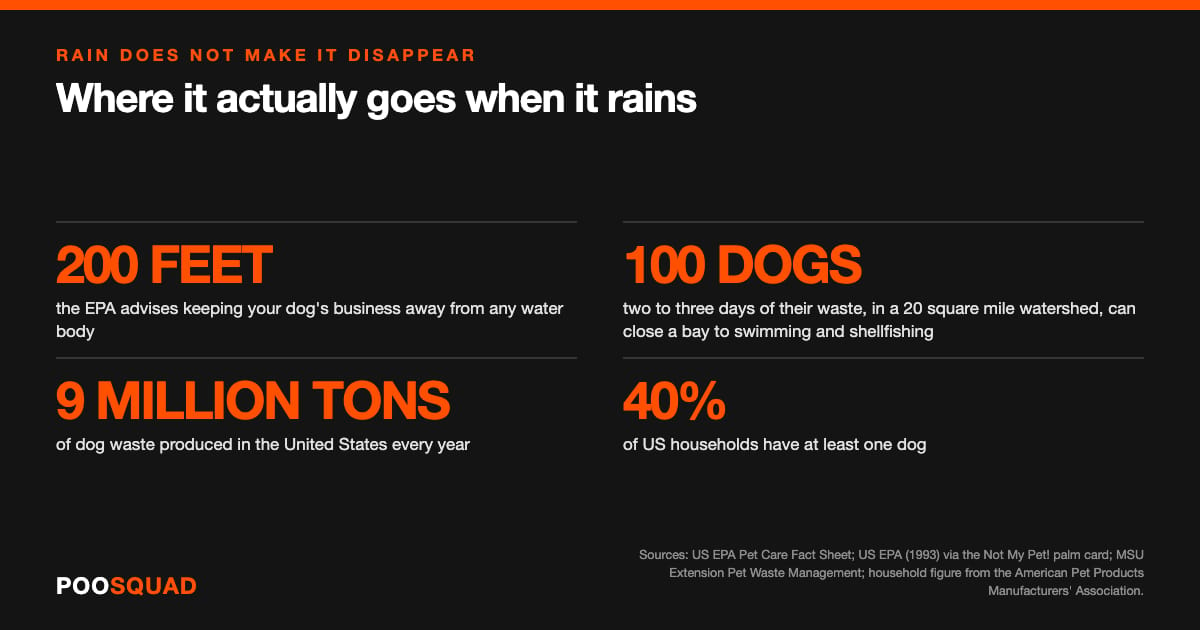
The EPA estimates that two days of waste from 100 dogs can put enough pollution into nearby water to close a beach. Not in some distant city — anywhere with dogs and rain.
So when you tell yourself the rain "washed it away," the more accurate version is: the rain moved it from your yard to your watershed.
How long does dog poop actually take to decompose in rain?
Slow. Slower than the internet pretends.
In ideal warm, sunny, biologically active conditions, a small pile might break down in 8 to 9 weeks. In cooler, wetter, shadier conditions — including rainy spring — it commonly takes 6 to 12 months. Cold climates can stretch that past a year.
Rain helps by breaking the pile into smaller particles. Rain hurts by keeping the soil cool and wet, which slows microbial activity. And the harmful pathogens — roundworm and hookworm eggs especially — can survive in soil for years even after the visible poop is gone.
Translation: even when the pile disappears, the contamination clock is still running. Long after the rain.
Where the myth comes from
The "rain washes it away" idea isn't malicious. It's just wishful.
Most of us grew up watching rain move leaves, dirt, and grass clippings around. We assumed dog poop worked the same way. It doesn't. Plant matter is mostly cellulose. Dog waste is a biological cocktail with bacteria designed to survive a digestive tract.
The other reason the myth survives: out of sight, out of mind. If we can't see it, we tend to call it gone. The yard owner gets short-term relief. The watershed gets the bill.
Spring rain is the worst-case scenario
Late winter and spring are peak runoff season. Three reasons why.
The ground is saturated, so water travels across the surface instead of soaking in. The grass is short and not yet thick, so there's nothing slowing the runoff down. And homeowners haven't done their first deep yard cleanup yet, so months of accumulated waste — frozen, hidden, or ignored — are all in play at once.
That stretch from late February through May is when most pet-waste runoff hits local waterways. It's also when your kids are starting to play outside again and your dog is back to rolling in the grass.
This is the season where "I'll let the rain handle it" goes sideways the fastest.
What "letting the rain handle it" actually costs your yard
Beyond the watershed angle, the lazy strategy hurts your own grass.
Dog poop is high in nitrogen and salt. In small amounts spread thin across a big yard, that's no big deal. In concentrated piles sitting in one spot, it's fertilizer burn. Yellow patches. Dead spots. The kind of lawn that looks like the dog left a map.
We wrote a longer breakdown of whether dog poop counts as fertilizer — short version: not really, and not the way you'd want.
Then there's the dissolving question. People ask all the time about products that supposedly melt poop in place. We covered what actually dissolves dog poop in your yard — short version: most of it is marketing, and the safest, fastest "dissolve" is still scooping.
And yes, in many places it's illegal to leave dog poop in the yard — even your own yard, depending on local code. Most homeowners don't realize this.
What to do instead
Three options. Pick the one that fits your life.
Scoop before the rain
Easiest if you've got the time and the lawn isn't too far gone. Walk the yard before a storm and clear what you can. Bag it. Trash it. The pre-storm pass is the highest-leverage 10 minutes you can spend.
Scoop right after the rain
If you missed the pre-storm window, give the lawn a few hours to drain, then go through with a scoop and a bag. The rain will have softened things, which makes it grosser but actually faster. Wear boots you don't love.
Hire it out
If the yard is bigger than your tolerance, or the household is two-dogs-and-up, or you've fallen weeks behind, this is the move. A weekly visit usually keeps things clean enough that one rainstorm doesn't send a month of waste into the storm drain.
Our crews do this by the visit, weekly, or every other week — whatever the yard needs. We bag, haul, and disinfect the pickup tools between properties so we're not carrying anything between yards.
Cleanup after a heavy storm
If the yard already got hit, here's the quick recovery sequence.
Wait until the surface puddles drain. Walking on a saturated lawn does more damage than the poop did.
Then walk the yard in a grid. Check the low spots — that's where everything washes to. Bag what you find. Hose off any concrete, but aim the water toward the lawn, not the storm drain.
If you've got a serious smell, baking soda on the affected lawn area helps. Lawn-safe enzymatic cleaners work too. Just don't pressure-wash poop into your gutter system. That's the move that creates the runoff problem we've been talking about.
A quick word on storm-drain etiquette
Hosing your sidewalk or driveway "clean" with the hose pointed at the gutter is the most common version of accidental water pollution. It feels like cleaning. It's just relocating the problem.
Always direct cleanup water toward grass or soil where it can filter. Never toward a storm grate. Most cities have a 311 line for reporting illicit discharge, and many neighborhoods have voluntary stormwater programs you can sign up for if you want to learn more.
So, does rain wash dog poop away?
No. It hides it, moves it, and sends the bacteria and parasites somewhere they shouldn't be.
The good news is the fix is simple. Scoop before, scoop after, or hand the job off. Whichever path you pick beats the "rain will handle it" plan, which never quite does.
We'd rather you pick one of the first two and call us only when you actually want to. So — short summary — your rain isn't a cleaning service. We are.
Frequently Asked Questions
Will rain dissolve dog poop?
No. Rain breaks dog poop into smaller pieces and washes them into soil, runoff, or storm drains, but it does not dissolve the waste. Bacteria and parasite eggs survive the breakdown and remain in the soil for months — and in some cases years.
Should I pick up dog poop before it rains?
Yes, if you can. Picking up before a rainstorm prevents bacteria-laden runoff from leaving your yard and entering local waterways. It also keeps your lawn from getting fertilizer burn and yellow spots. Even a 10-minute pre-storm pass is worth it.
How long does dog poop take to decompose in rain?
Six to twelve months in typical conditions. Cold or shaded yards can take more than a year. Rain helps fragment the pile, but it slows microbial activity by keeping the soil cool and wet. Pathogens like roundworm eggs can survive in soil for years.
Is dog poop in my yard contaminating the water supply?
Indirectly, yes. Dog waste is classified as a nonpoint source pollutant by the EPA. When rain hits it, bacteria and nutrients run off into storm drains, which often flow untreated into creeks, rivers, and lakes. Pet waste is a leading cause of urban water quality issues.
Is it OK to leave dog poop in the yard if it's about to rain?
No. Leaving waste in the yard before a rainstorm makes the runoff problem worse, not better. The storm doesn't clean the yard — it spreads the contamination across a larger area and into the watershed. Pick up before the rain or right after.
We can take it from here
If your yard is overdue, or your spring catch-up just isn't happening, we'll take it from here. Find a Poo Squad crew near you on our location map, or learn more about how our residential pooper scooper service works.
You handle the dog. We'll handle the yard.
If you came here because you're not 100% sure what kind of poop is on your lawn — neighbor's dog, raccoon, possum, something else — our backyard animal poop identification guide walks through the most common ones.
And if rain is in the weekend forecast? Pre-storm scoop. 10 minutes. Trust us.