How Often Should You Scoop Your Yard? Honest Answer
· Poo Squad
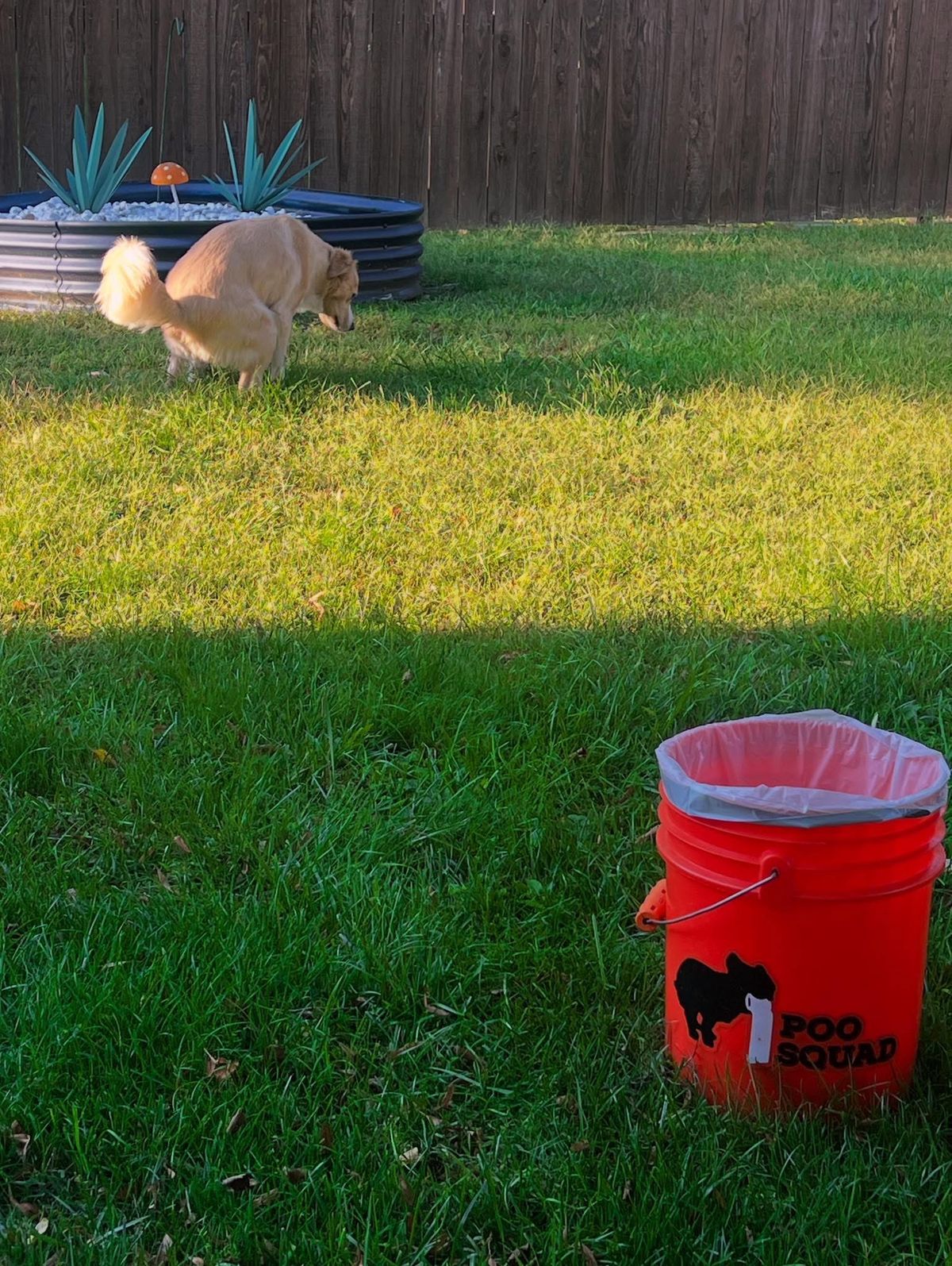
Tired of dodging landmines on the way to your grill?
You're not alone. Most dog owners scoop way less than they think they should, and then wonder why the yard smells, the lawn looks rough, and nobody wants to play out back anymore.
So let's give you a real answer. Not "as often as you can." Not "whenever you have time." A practical, dog-by-dog, yard-by-yard guide to how often you should actually be scooping. Plus what happens when you don't.
We've been doing this for years. We've seen every kind of yard. Here's what actually works.
The Quick Answer (For People Who Just Want a Number)
For most homes: scoop every 2 to 3 days, minimum. Daily is better.
If you have one dog and a big yard, twice a week is the floor. If you have two or more dogs, or a small yard, you really do need to scoop daily. Or hire someone to.
That's the short version. The long version is more honest, because real life has weather and weekends and dogs who poop in the same spot every single time. Keep reading.
Why Scoop Frequency Even Matters
Dog poop is not like fallen leaves. It doesn't break down into something useful. It isn't yard waste. It's biological waste, and the longer it sits, the more problems it causes.
A single gram of dog poop contains millions of bacteria. We've written before about how long that bacteria can stick around in your soil. The short version: weeks, sometimes longer. Roundworm eggs can survive in yards for years.
The CDC notes that dog poop can carry parasites and bacteria that spread to humans and other pets. That's not a scare tactic. That's why your kid catches something after rolling around in the grass and you can't figure out where it came from.
And it's not just health. The real risks of letting it pile up include lawn damage, attracting flies and rodents, neighbor complaints, and in some cities, actual fines.
How Often by Number of Dogs
This is the part most blog posts skip. They give you one number for everyone. That's lazy. The right answer depends on how many dogs you've got.
One Dog
One healthy dog poops one to three times a day. That adds up to roughly 14 to 21 piles a week. If you let that sit, your yard goes from "fine" to "what is that smell" pretty fast.
Our recommendation: scoop every 2 to 3 days at minimum. Once a week is the absolute floor, and only if your yard is large and your dog spreads things out. Daily walks count for some of it, but most dogs still do their business at home.
Two Dogs
Now you're at 28 to 42 piles per week. Math gets ugly fast.
Daily scooping is the right rhythm. If you can't do daily, twice a week is the absolute floor, and you'll notice the difference in how the yard smells, especially in summer.
Three or More Dogs
Daily. No exceptions. Three dogs can produce nearly 60 piles a week. A backyard cannot absorb that. Your lawn will brown. Your neighbors will notice. And by Sunday, walking to the trash bin is its own adventure.
If you've got three or more dogs and a job and a life, this is exactly what residential pooper scooper service exists for.
How Often by Yard Size
Yard size matters too. But probably not the way you think.
Small Yards (Under 1/4 Acre)
Small yards need more frequent scooping, not less. There's nowhere for the waste to disappear into. Daily cleanup keeps things tolerable.
Medium Yards (1/4 to 1/2 Acre)
You can stretch it to every 2 to 3 days for one dog. Two dogs, you're back to daily or every other day. Don't fool yourself. Even a half acre fills up fast.
Large Yards (Over 1/2 Acre)
Big yards forgive a lot. But they also create the "I'll get to it later" trap. Twice a week minimum, even if your dog uses the whole property. Otherwise you stop noticing it, and then a friend visits and notices for you.
Weather Changes Everything
Most cleanup advice ignores weather. We can't, because we work in 23+ cities across the country. Here's what we've learned.
Summer
Heat speeds up decomposition. That sounds good. It's not. Hot piles smell worse, attract flies fast, and turn into a soft mess that's harder to scoop. Summer means scoop more often. Daily is ideal in July and August.
Fall and Spring
Mild weather is the easiest scoop window. Stay on your normal rhythm. Spring is also when winter buildup gets revealed. If you let snow cover a season's worth of poop, the spring thaw is going to be a project.
Winter
Cold weather slows decomposition, so the smell drops. But the piles don't disappear. They just freeze in place and wait. We get a lot of calls in March from people who finally see what's been hiding all winter. Scoop through the winter when you can. Future you will thank present you.
Wet Weather
Rain doesn't wash dog poop away. It liquefies it. Then it runs into your storm drains, into local waterways, and contributes to the pollution problem, which is part of why the EPA classifies dog waste as a pollutant. Try to scoop before big storms.
What Happens If You Don't Scoop Often Enough
People underestimate this. Here's the real list of consequences:
Lawn Damage
Dog poop is high in nitrogen. But not in a good way. Concentrated, sitting nitrogen burns grass. You get yellow patches. Then dead patches. Then bare dirt. Then mud after every rain. Regular scooping prevents the whole chain.
Flies and Pests
Flies find fresh dog poop within hours. Rodents follow soon after. So do raccoons, opossums, and other backyard visitors that are looking for an easy meal. Less poop, fewer pests.
Smell
The smell isn't just unpleasant. It's the actual signal that bacteria are multiplying. By the time you can smell it from the patio, you've waited too long.
Pet Health
Dogs sniff. Dogs eat what they shouldn't. Dogs walk through it and lick their paws. A yard with old waste in it is a constant low-grade health risk for the dog who lives there.
Family Health
Kids playing in the yard pick up whatever's in the soil. Hookworm, roundworm, Giardia. All of these can transfer through contact with contaminated grass.
Neighborhood Complaints
If your neighbor's window opens to your yard, they smell it before you do. We've helped customers get out of HOA disputes that started exactly this way.
How to Build a Scooping Habit That Actually Sticks
Knowing how often to scoop is one thing. Doing it is another. Here's what works for our customers who DIY:
Pick a trigger. Right after morning coffee. Right before you take the trash out. Right after walking the dog. Pair it with something you already do.
Keep the right tools by the door. A long-handled scooper, a small bucket, and biodegradable bags. If the tools are convenient, the chore is convenient.
Use a dedicated outdoor trash bin. Don't make trips into the house with a bag of poop. Put a sealed bin near the back door.
Don't try to do a week at once. A small daily scoop takes 5 minutes. A weekly catch-up takes an hour. The math is brutal.
Watch for changes. While you're out there, look at the poop. Color, texture, anything weird? Here's what your dog's poop is trying to tell you. We even built a free poop report card if you want a second opinion.
When It's Time to Hand It Off
We're not going to pretend everyone wants to scoop their own yard. We do this professionally because plenty of people would rather pay someone else to handle it. Fair.
You're probably ready for a service if:
You have two or more dogs. You're behind by more than a week, more than once a month. You've got a bad back, knees, or pregnancy that makes scooping miserable. You travel for work. You host people in your backyard regularly. You just hate it. (Honest answer. Plenty of people do.)
Our trained pros take the crap (literally) off your hands. Weekly, twice-weekly, or one-time spring cleanups. Whatever fits your yard.
You can find your local Poo Squad here.
Frequently Asked Questions
How often should I pick up dog poop in a small yard?
Daily. Small yards have no room for waste to spread out, and bacteria, smell, and lawn damage build up fast. Even one dog in a small yard needs daily cleanup to keep the space usable.
Is it okay to scoop the yard once a week?
Once a week is the absolute minimum, and only realistic for one dog in a large yard. Even then, you'll deal with smell, lawn burn, and pests. Most yards do better with cleanup every 2 to 3 days.
Does dog poop dissolve on its own?
No. Dog poop does not biodegrade like leaves or grass clippings. It can take a year or more to break down naturally, and during that time it leaches bacteria and parasites into your soil. You have to scoop it.
How often should I have a pooper scooper service come?
Most customers go weekly. Two or more dogs, or a small yard, often need twice-weekly visits. We also do one-time cleanups for spring catch-ups, move-ins, and party prep.
Will rain wash dog poop away?
No. Rain breaks dog poop down into a slurry that runs into storm drains and local waterways. It doesn't disappear. It just spreads. The bacteria are still there, just over a wider area. Scoop before storms when you can.
Is it bad to leave dog poop on the lawn over winter?
Yes. Cold weather hides the smell, but the piles freeze in place and wait. Spring thaw reveals an entire winter's worth of waste at once. Scoop through the cold months when you can, or book a one-time spring cleanup.
The Bottom Line
If you remember nothing else: scoop every 2 to 3 days for one dog, daily for two or more, daily in summer no matter what. That's the rhythm that keeps your yard usable, your lawn alive, and your dog (and family) healthy.
If that sounds like a lot, it is. That's why we exist. We handle the mess. You get the yard back.
Find your local Poo Squad and we'll take it from here.