How to Clean Dog Poop Off Concrete (Fast & Safe)
· Poo Squad
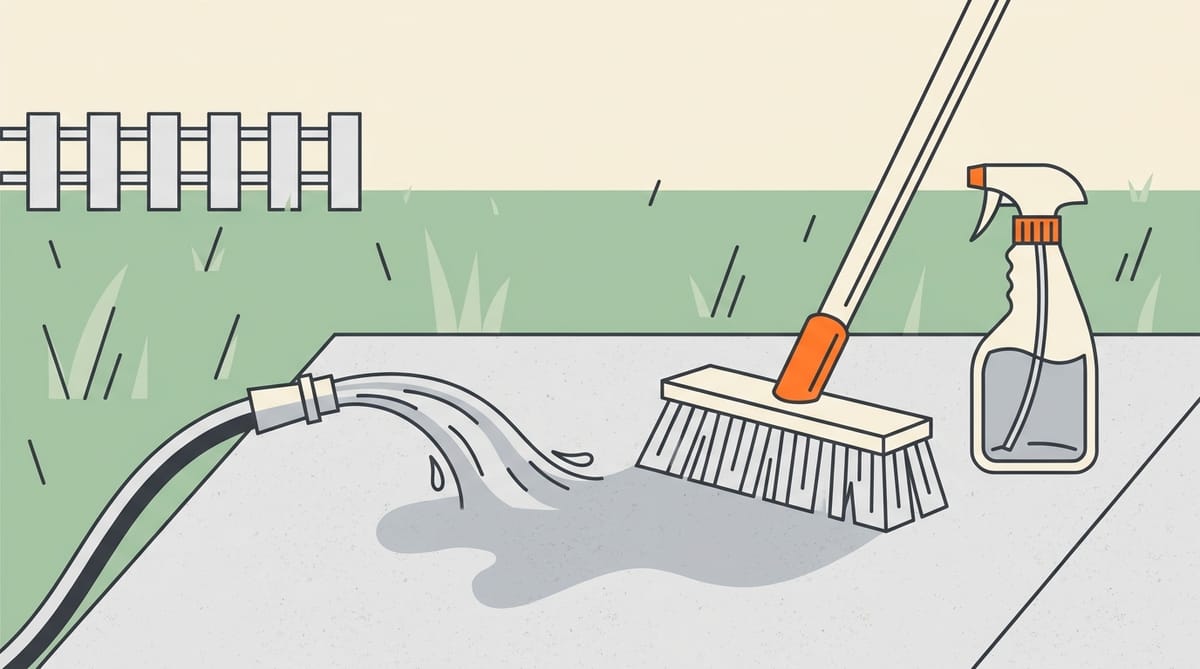
You stepped in it. Or smelled it before you saw it. Either way — there's dog poop on your concrete, and now there's a brown stain that won't quit.
Concrete is sneaky. It looks tough. It's actually full of tiny holes.
Those pores soak up moisture, color, and smell like a sponge. So poop on a patio is a whole different job than poop on grass. Grass and soil pull the mess down and away. Concrete locks it in.
Good news: you can get it out. You just have to do it in the right order. Here's how.
Why Concrete Holds On to Poop
Grass forgives. Concrete remembers.
When poop sits on a driveway, patio, or dog run, the liquid wicks into the surface. The stain sets. The smell sets deeper. And the longer it sits, the worse both get.
That's why "just hose it off" rarely works. The water pushes the mess around. The stain stays put.
You need to lift the solids, break down what soaked in, and flush it out. Three steps. In that order.
Step 1: Lift the Bulk (Don't Smear It)
Grab gloves first. Always.
Use a flat-edged scraper, a plastic putty knife, or a disposable spoon. Work from the outside edge inward. The goal is to lift, not smear — pushing it around just grinds it deeper into the pores.
If the poop is fresh and soft, give it ten minutes to firm up. A slightly drier mess lifts cleaner than a soupy one.
Bag what you scrape. Tie it off. Toss it in the outdoor trash.
Now you've got the chunks gone. But the stain and smell? Still soaked in. That's the next part.
Step 2: Treat the Stain With the Right Cleaner
This is where most people go wrong. They reach for bleach. Don't. We'll get to why in a minute.
For dog waste on concrete, an enzymatic cleaner is your best friend. Enzymes literally eat the organic stuff — the proteins and fats that cause the stain and the smell. They don't cover it up. They break it apart.
Mix a hard-surface enzyme cleaner with hot water. Roughly one part cleaner to three parts water works well.
Soak the stain. Then soak six inches past it in every direction. Poop spreads underground in concrete more than you'd think.
Let it sit. At least five minutes. Ten is better. The enzymes need time to get down into the pores and do their thing.
No Enzyme Cleaner? Vinegar Works Too
Out of enzyme cleaner? You've got a backup in the kitchen.
A 1:1 mix of white vinegar and warm water cuts through a lot of the mess on hard surfaces. It's mild, it's pet-safe, and it neutralizes odor instead of masking it.
It won't be quite as strong as a true enzyme product on an old, set-in stain. But for a fresh accident on the patio, it does the job. The same trick helps when you're clean it off your shoes, too.
Whichever you use — let it soak before you scrub. Don't rush it.
Step 3: Scrub, Then Rinse
Now grab a stiff-bristled brush. A deck brush or a sturdy scrub brush is perfect.
Scrub in circles. Get into the texture and the pores. You'll see the stain start to lift and the color fade. Add a little more cleaner if it dries out while you work.
Then rinse. A garden hose on a strong setting flushes the loosened gunk out of the surface and off your patio.
Check your work once it dries. Concrete looks darker when it's wet, so a "clean" spot can still show a shadow once it dries out. If a ghost of the stain remains, run the whole process again. Stubborn stains often need two rounds.
For a finishing touch on smell, sprinkle baking soda over the spot, work it in, and hose it through. It's the same idea as kill the smell for good out in the grass.
For Set-In Stains: Bring Out the Pressure Washer
Some stains have been there a while. Scrubbing alone won't move them. That's pressure-washer territory.
Here's the key: treat the stain with enzyme cleaner or vinegar first, then pressure wash. The cleaner breaks the organic material down inside the pores. The pressure washer blasts it out. Skip the soak and you're just spraying water at a stain.
You want at least 1,500 PSI to do anything real. The job goes faster at 2,500 to 3,000.
Hold the nozzle six to eight inches off the surface. Use a fan-tip spray, never a pinpoint stream — a narrow jet can actually gouge and pit the concrete. Keep the wand moving.
One pass with a treated stain and a fan tip usually clears what scrubbing couldn't.
Why You Should Skip the Bleach
We promised we'd explain. Here it is.
Bleach feels like the heavy hitter. It's the wrong tool for this job for a few reasons.
It only masks odor — it doesn't break down what's causing it. It can eat away at any sealer or coating on your concrete, especially if you don't rinse it off well. And bleach runoff is toxic to your grass, your shrubs, and the soil right next to the patio.
The fumes are no joke either, especially on a covered patio or in a garage.
Worst part? If you use bleach (or ammonia) before an enzyme cleaner, it kills the enzymes. That locks the odor in instead of removing it. So you've made the real fix harder.
Mild and pet-safe wins here. Enzymes or vinegar. Every time.
This Isn't Just Gross — It's a Health Thing
A poop stain on the patio isn't only an eyesore. It's a little reservoir of bacteria and parasites.
Dog waste can carry roundworm and hookworm eggs. And those don't politely disappear when the visible mess is gone. Per the CDC, roundworm eggs can linger for months or years in contaminated soil and surfaces.
Hookworm is worse on a patio. The larvae can burrow right through bare skin — exactly the kind of contact you get when someone walks barefoot across a deck or kids play on the concrete.
That's the real reason to clean it properly and promptly, not just rinse and forget. Those bugs can stick around for a long time. Cleaning the surface right is what actually clears them out.
Stop the Stains Before They Start
Cleaning the same spot every week gets old. Here's how to make it rare.
Seal the concrete. If you've got a dog run, a kennel area, or a patio your dog uses daily, a penetrating concrete sealer is a game-changer. It fills the pores from the inside, so waste, urine, and moisture can't soak in. It doesn't change how the concrete looks or feels, and it doesn't get slippery. Future cleanup becomes "wipe and rinse" instead of "scrub and pray."
Act fast. The faster you lift a fresh mess, the less it sets. A two-minute scrape today beats a pressure-washing session next weekend.
Pick a potty spot. If your dog goes in one corner of the yard instead of all over the patio, you've cut your concrete cleanups way down. (Hard surfaces aren't the only ones that stain — here's getting poop out of carpet for the indoor accidents.)
The Easiest Fix: Don't Let It Pile Up
Every one of these steps starts the same way: someone has to deal with the poop.
That's the part nobody loves. The scraping. The scrubbing. The bagging. The barefoot-on-the-patio worry every summer.
That's where we come in. Poo Squad does the dirty work so your concrete, your grass, and your weekend stay clean. With regular residential scooping, the mess never gets the chance to set into your patio in the first place.
We take the crap. Literally. You get the yard back. And if you've ever wondered what actually dissolves dog poop out in the grass, we've got you covered there too.
Frequently Asked Questions
Does dog poop stain concrete permanently?
Not usually — but it can if you ignore it. Concrete is porous, so the color and odor soak into the surface. Lift the solids, treat the spot with an enzyme cleaner or a vinegar-water mix, scrub, and rinse. Set-in stains may need a second round or a pressure wash, but most come clean.
What's the best cleaner for dog poop on concrete?
An enzymatic cleaner made for hard surfaces. Enzymes break down the organic waste that causes both the stain and the smell, instead of just covering it. Mix it with hot water, soak the area, let it sit at least five minutes, then scrub. White vinegar diluted 1:1 with water is a solid backup.
Can I use bleach to clean dog poop off concrete?
Better not to. Bleach only masks odor, can damage concrete sealer, and the runoff is toxic to nearby grass and soil. And if you use it before an enzyme cleaner, it kills the enzymes and locks the smell in. Stick with enzyme cleaners or vinegar.
How do I get the dog poop smell out of concrete?
Smell lives in the pores, so surface sprays won't cut it. Use an enzymatic cleaner to break down the odor-causing molecules at the source, let it soak, then scrub and rinse. Finish by sprinkling baking soda, working it in, and hosing it through.
Will a pressure washer remove dog poop stains from concrete?
Yes — but treat the stain first. Apply enzyme cleaner or vinegar so it breaks down the waste in the pores, then pressure wash to flush it out. Use at least 1,500 PSI, hold the nozzle six to eight inches away, and use a fan tip so you don't gouge the surface.
Clean Concrete, Zero Scrubbing
You shouldn't have to spend your Saturday on your knees with a brush and a bottle of enzyme cleaner.
Let us handle the poop before it ever becomes a patio stain. Find your local Poo Squad and get your concrete — and your whole yard — back.