How to Train Your Dog to Poop in One Spot (Step-by-Step)
· Poo Squad
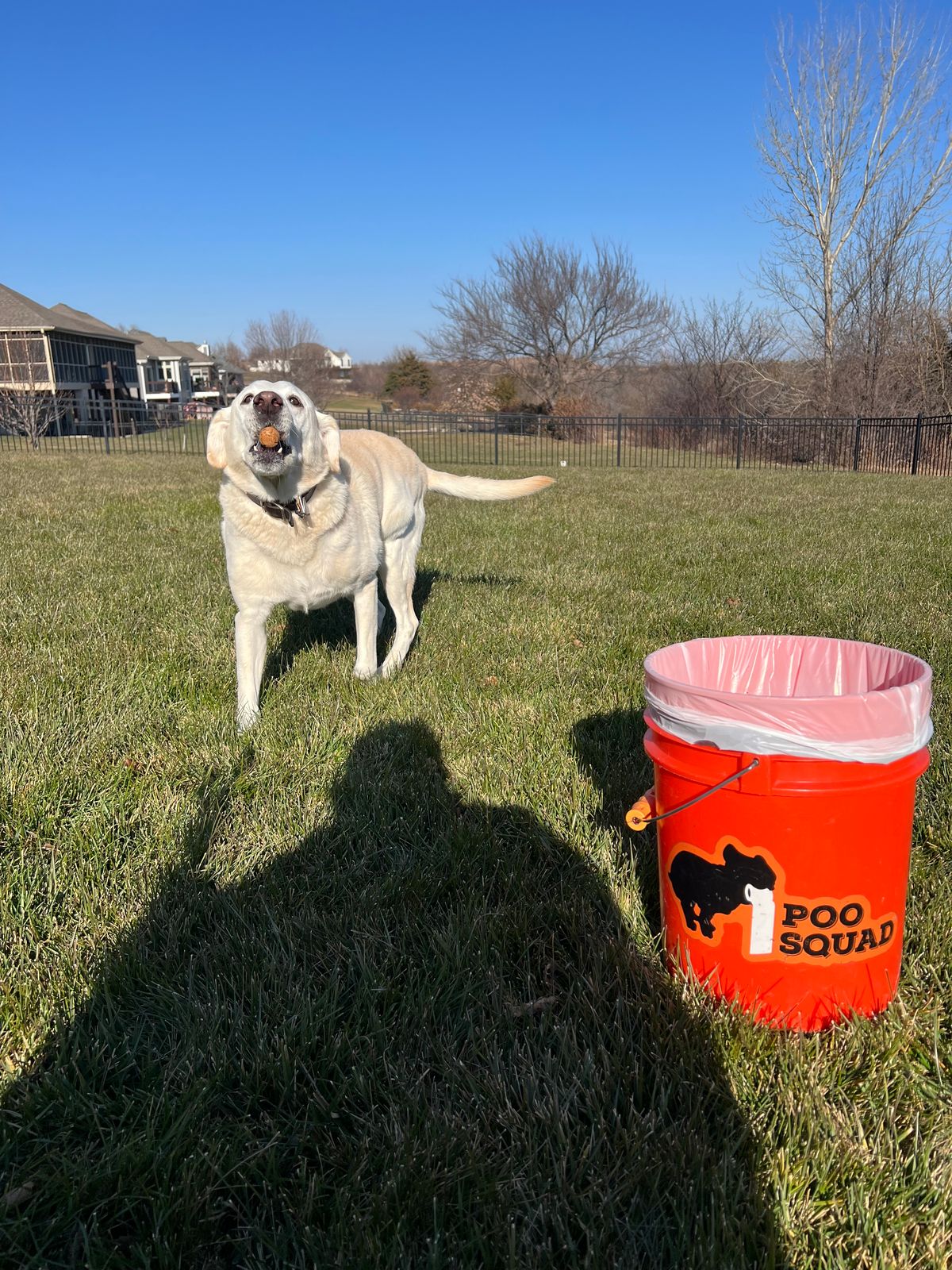
Tired of mowing around landmines? You're not alone.
The good news: your dog can absolutely be trained to poop in one corner of the yard. Most puppies pick it up in two to three weeks. Adult dogs take a little longer. Older dogs with set habits can take a month or two. But it works. We've watched hundreds of clients do it.
Here's exactly how we'd set it up — the spot, the routine, the rewards, and the mistakes that quietly undo all your progress.
Why Bother Training a "Poop Spot" at All?
Three real reasons.
One: your grass. When a dog uses the whole yard as a bathroom, you end up with burn patches, dead spots, and a lawn that smells funky in summer. Concentrate the waste in one area and the rest of the yard recovers. Dog poop isn't great for grass — concentrating it just contains the damage.
Two: cleanup is way faster. Instead of grid-walking the whole yard hunting for piles, you scoop one spot. That's it. Two minutes instead of fifteen.
Three: hygiene zones. Kids playing on the grass. Bare feet on the patio. A picnic blanket spread out for dinner. If poop only happens in one corner, the rest of the yard stays safe to actually use.
Worth the few weeks of training? Yeah. We think so.
Pick the Right Spot (This Matters More Than You'd Think)
Don't rush this part. The spot you pick is the spot you're committing to for the life of the dog. Move it later and you start over.
Look for:
- A quiet corner away from foot traffic, gates, and play areas
- Good drainage — no soggy puddles after rain
- Soft, consistent footing (grass, mulch, or pea gravel all work)
- Easy to reach with a hose or a scoop
- Big enough for your dog to circle and sniff
Quick sizing rule: give the dog a space roughly five times their body length. A 30-pound dog needs about a 5-by-5 area. A Great Dane needs more. Cramping the space is the fastest way to get a dog who refuses to use it.
If your yard has a back corner that's already a little shady and unused, that's almost always the winner. Bonus points if it borders a fence — dogs like a wall behind them when they squat.
Tools You Actually Need (Spoiler: Not Many)
You can do this with stuff you already own.
- A 6-foot leash (no retractables — you want control)
- A treat pouch with small, high-value treats your dog only gets for this
- One short verbal cue. "Go potty." "Do your business." Pick one and never change it.
- Optional: a small flag, stake, or border edging so the spot is visually obvious
That's the kit. No special turf, no expensive training pads, no apps. Consistency is the only tool that actually matters.
The 5-Step Routine
This is the part to memorize. Do it the same way every single time for the first two to three weeks.
Step 1: Pre-clean the yard
Before training starts, scoop the entire yard. Spotless. The only smell you want left is in the new designated spot.
Pro move: take one fresh pile and place it in the new spot on day one. Yes, on purpose. Dogs find their previous scent and go back to it. This is the single fastest shortcut in the whole process.
Step 2: Leash up
Even in your own yard. Especially in your own yard. The leash is what stops the dog from wandering off to "their old corner" by habit.
Step 3: Walk directly to the spot
No detours, no sniffing the patio, no playing on the way. Straight there.
Step 4: Use the cue
Once you're standing on the spot, say the cue word. Calm voice. Repeat it every 20-30 seconds. Stand still. Let them sniff and circle.
If nothing happens after 5 minutes, walk them back inside. Try again in 15-20 minutes. Don't let them roam the yard in the meantime — that's how the bad pattern gets reinforced.
Step 5: Reward fast
The second they finish, treat and praise. We mean the literal second. Not after they walk off. Not after you scoop. Right then. The reward is teaching them that this exact spot equals this exact thing happening.
After a successful reward, off-leash play is fine. That's their reward beyond the treat — yard freedom comes after the job is done.
Timing Wins Most of the Battle
Dogs poop on a fairly predictable schedule. If you take them out at the right times, you barely need to "train" — you just need to catch them.
The big windows:
- First thing in the morning (within 5 minutes of waking)
- 5-30 minutes after a meal
- After a nap
- After 10+ minutes of active play
- Right before bed
For puppies, add a window every 2-3 hours during the day. Bladders and bowels are tiny. Accidents are about timing, not stubbornness.
If your dog is brand new to the yard and won't go at all, that's a different problem — we wrote a full guide for when your dog won't poop in the yard at all.
How Long Does This Actually Take?
Honest answer: it depends on the dog.
Puppies (8-16 weeks): 2-3 weeks of consistent routine. Their habits aren't formed yet. You're writing on a clean slate.
Adult dogs in a new yard: 3-4 weeks. They've got habits, but the new environment makes it easier to install new ones.
Older dogs with years of free-roam yard habits: 6-12 weeks. Possible, but you're rewiring a deep pattern. Patience is the whole game here.
The AKC's puppy potty training timeline has solid age-by-age guidance if your dog is still under six months — worth a quick read alongside this one.
The Mistake Most People Make
We see the same four slip-ups over and over.
Mistake 1: Changing the spot. Day 4 you decide the original corner isn't quite right. You move it 10 feet over. Your dog is now confused, and the clock resets. Pick once, commit.
Mistake 2: Cleaning the spot too thoroughly, too early. In the first week, leave a small marker pile (yes, really) and skip enzyme cleaner. The scent is the lighthouse. Once the habit is locked in, you can scoop and rinse normally.
Mistake 3: Letting them roam first. If the dog gets to wander the yard before being walked to the spot, they'll find a softer patch and use that. Leash first. Spot first. Roam after.
Mistake 4: Inconsistent praise. Treating sometimes and not other times sends a mixed signal. For the first three weeks, treat every single time they go in the right spot. No exceptions.
When Your Dog "Forgets"
Setbacks are normal. You moved a piece of patio furniture and now the spot feels different. The yard got rained on. A neighbor's dog visited and left a scent somewhere weird.
Don't punish. Just reset the routine for a week. Back on the leash. Back to walking them straight to the spot. Back to the high-value treats. They'll lock in again fast — usually within a few days.
And never scold a dog after the fact. They don't connect the punishment to the act. They just learn to hide future accidents in the bushes, which is a much worse problem.
Maintain the Spot So They'll Keep Using It
The spot needs upkeep. A neglected poop zone gets ignored eventually — dogs don't love standing in a pile to add to it.
Once the habit is locked in (about week three or four):
- Scoop daily — every single day, ideally morning
- Rinse with a hose weekly to keep odor down
- If the area is grass, consider switching to mulch or pea gravel long-term — it handles repeat use better
- In summer, hit the spot with an enzyme cleaner monthly to keep bacteria in check
If you want a deeper rinse-and-reset routine, our full yard cleanup routine walks through tools, sanitation, and timing. And if the smell is getting away from you, what dissolves dog poop in the yard covers safe enzyme and lime options.
Why We Don't Recommend Indoor Potty Pads as a Long-Term Fix
Pads are fine as a short-term tool for tiny puppies, sick dogs, or apartment-only setups. But teaching a dog "inside is sometimes OK" while also trying to teach "outside in one spot" creates a confused dog.
If you're going to use pads, treat them as a bridge. Two to four weeks max. Then move outside full-time.
Special Cases
Apartment Dogs Without a Yard
Same logic, different location. Pick a single grass patch on your regular walk route. Walk there first every time. Use the cue. Reward fast. The "spot" becomes a real-world location on your block, not a yard corner.
Multi-Dog Households
Same spot works for multiple dogs — they'll share it once one dog is established. Train one dog first if you can, then the second dog will often follow the first by scent. If you train two at once, train them on separate leashes, not together.
Rainy or Snowy Climates
The spot still works. Just keep it accessible — clear snow off it, or pick a spot with some tree cover for rain. Dogs that have used a spot for years will still go to it even in bad weather.
When to Bring in the Pros
Training the spot is one half of the deal. Scooping it daily is the other half — and that's the part that quietly falls apart for most busy households around month two.
If you've got the spot locked in but the scooping is slipping, a weekly residential scooping service takes the routine off your hands entirely. We hit the spot, bag everything, and your trained yard stays trained.
FAQ
How long does it take to train a dog to poop in one spot?
Most puppies lock it in within 2-3 weeks of consistent routine. Adult dogs in a new yard usually take 3-4 weeks. Older dogs with years of free-roam habits can take 6-12 weeks. The single biggest factor is whether the routine stays identical every day — same leash walk to the same spot with the same cue word.
What's the best spot in the yard for a dog to poop?
A quiet corner with good drainage, soft footing (grass, mulch, or pea gravel), away from play areas and foot traffic. Size it about five times your dog's body length so they can circle and sniff. A spot that borders a fence is ideal because dogs prefer having something behind them when they squat.
Can older dogs learn to poop in one spot?
Yes. Older dogs take longer — usually 6-12 weeks instead of 2-3 — because you're rewriting an existing habit, not building a new one. Patience and absolute consistency are the whole game. Same spot, same cue, same reward, every single time. No shortcuts.
Should I leave one poop pile in the spot to attract my dog back?
Yes, during the first week. Leave one fresh pile in the designated spot as a scent marker — dogs find their own scent and go back to it. After the habit is established (around week three), you can scoop and rinse normally without losing the pattern.
What should I do if my dog refuses to use the spot?
Two likely culprits. First: the timing is off — try again 15-30 minutes after their next meal or nap. Second: the spot doesn't suit them — check for poor drainage, too much foot traffic, hard footing, or something nearby that scared them. Move the spot only once, then commit to the new location for at least two weeks before deciding it isn't working.
You've Got This
Training a dog to poop in one spot isn't a personality trait of a "good dog." It's just a routine. Same spot. Same cue. Same treat. Repeat for a few weeks.
And when the spot is trained but the scooping still feels like a part-time job, that's what we're here for. Find your nearest Poo Squad and we'll handle the rest.