Why Does My Dog Poop Multiple Times a Day? | Poo Squad
· Poo Squad
Your dog just pooped. Again. That's the third pile today, and it's not even dinner time.
You're standing in the yard holding a bag, wondering if something's wrong. Or if this is just… them.
Here's the short answer: most of the time, multiple poops a day is completely normal. But not always. The trick is knowing which is which.
Let's walk through it.
What's Actually Normal for a Healthy Adult Dog
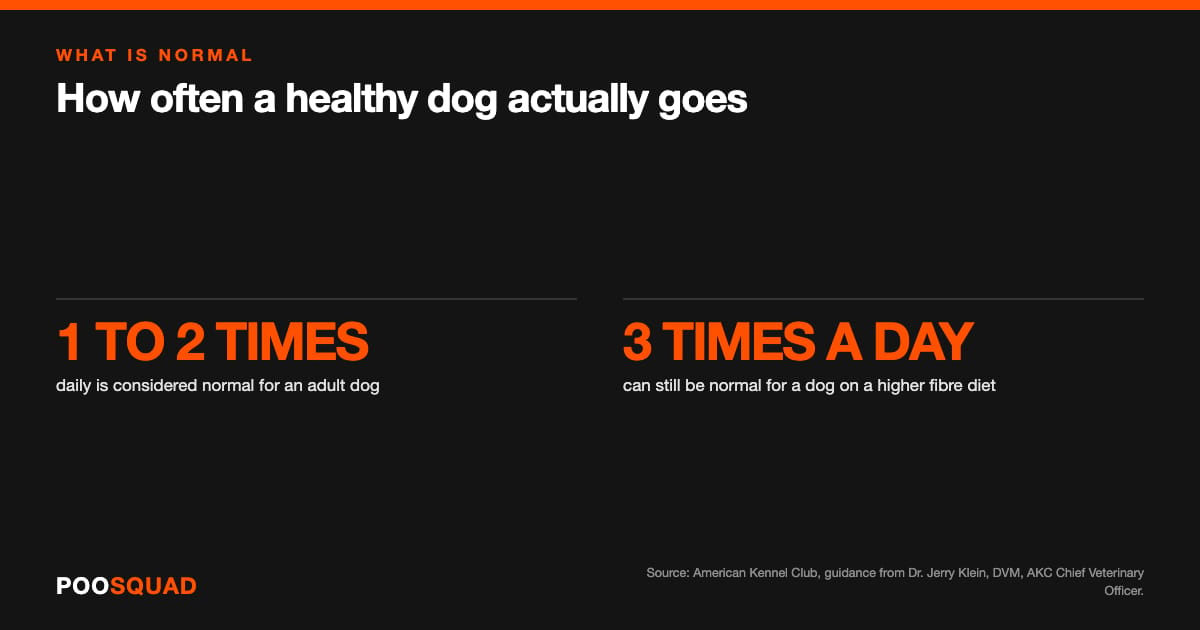
Most adult dogs poop one to three times a day. That's the healthy range.
Some dogs are once-a-day, like clockwork. Others go twice. A few go three times and have done it that way since they were a puppy. All of that is fine.
The thing vets care about isn't the exact number. It's your dog's normal. If your dog has been a twice-a-day pooper for five years and is still going twice a day, you don't have a problem. You have a routine.
A sudden change matters way more than a higher-than-average count.
Puppies Are a Different Story
Puppies poop a lot. Like, a lot a lot.
Four or five times a day is normal for most puppies. Some go more. Their digestive tracts are short, their meals are frequent, and they have basically no muscle control over the whole operation.
If you've got a new puppy and you're picking up after them five times a day, you're not doing anything wrong. They're just being a puppy.
Frequency drops as they grow. By six to twelve months, most pups settle into the adult one-to-three range.
Senior Dogs Often Slow Down
On the other end, older dogs sometimes drop to once a day. Sometimes less.
Slower metabolism, less activity, smaller meals. It adds up. As long as the poop looks normal and they're not straining, fewer trips outside is usually okay.
What's not normal in a senior is going more than 36 hours without pooping. That's a vet call.
So Why Is My Dog Pooping More Than Usual?
If your dog has always been a three-times-a-day kind of dog, that's just them. But if they used to go once and now they're going three times? Something changed.
Here are the usual suspects.
You're Feeding More Meals
This is the simplest explanation. Most dogs poop a few hours after they eat. Two meals a day usually means two poops. Three meals usually means three.
If you recently switched from one big meal to two, the math just changed. Nothing's wrong.
You Changed Their Food
Switched brands. Switched proteins. Switched from kibble to fresh. Any of those can crank up the poop count, especially in the first week or two.
Higher fiber formulas (think weight-control or "digestive" blends) are a classic culprit. More fiber means more bulk coming out the other end.
Fillers like corn, wheat, and soy can do the same. The body can't absorb much, so it goes straight through.
Sudden food changes also stress the gut. If the new food showed up in their bowl yesterday and they're pooping four times a day today, give it a week and reassess. Always transition food gradually: a little new mixed with a lot of old, ramping up over seven to ten days.
Too Many Treats
Be honest. How many treats did your dog get yesterday?
Training treats, chews, the crust of your sandwich, that piece of cheese when they did the cute thing. It adds up. And every extra calorie has to come out somewhere.
If frequency spiked and meals didn't change, look at the snacks.
Stress and Anxiety
Dogs poop more when they're stressed. New house. New baby. New dog in the family. Boarding. Travel. Loud thunderstorms.
The gut and the brain talk constantly. When the brain is anxious, the gut speeds up. More frequent poops are a textbook stress response.
This usually settles within a few days once the stressor passes. If it doesn't, your dog might be telling you something about their environment.
Parasites or Infection
Worms, giardia, coccidia, bacterial infections. All of them can cause frequent pooping, often with a side of diarrhea.
If multiple-times-a-day comes with loose stool, mucus, blood, or a dog that suddenly seems off, that's a vet visit. Don't wait it out.
Medical Conditions
Inflammatory bowel disease, food allergies, exocrine pancreatic insufficiency (EPI), and a handful of other conditions can drive up frequency. So can certain medications.
None of these are common, but they're real. If your dog is pooping a lot and losing weight, or pooping a lot and acting sick, your vet needs to see them.
When Multiple Poops a Day Is Totally Fine
Take a breath. Pooping multiple times a day is not automatically a problem.
It's fine if:
- The poops are formed and look normal (firm, log-shaped, chocolate brown)
- Your dog acts like themselves (eating, drinking, playing, sleeping normally)
- The frequency has been steady for weeks or months, not a sudden spike
- Your dog isn't straining or whining
- You're feeding two or three meals a day (more meals, more poops, simple)
A dog who poops three times a day and otherwise looks great is a dog who poops three times a day. That's it.
When It's a Red Flag
Call your vet if you see any of this:
- Pooping four or more times a day suddenly, when it used to be one or two
- Loose or watery stool that lasts more than 24 hours
- Blood, mucus, or unusual color in the poop (including orange poop)
- Straining without much coming out
- Frequent pooping plus vomiting, lethargy, no appetite, or weight loss
- A dog who seems urgent, can't make it outside, runs to the door panicked
- Worms or rice-like segments visible in the stool
The pattern matters more than the number. A dog pooping five times today after pooping twice a day for a year is sending a signal. Listen to it.
How to Get Frequency Back to Normal
If nothing's medically wrong, you can often dial it back with small changes.
Look at the food first. Check the protein source, the fiber content, and the ingredient list. High-quality food with real meat and fewer fillers usually means smaller, less frequent poops. Your dog absorbs more of it.
Watch the treats. If treats are creeping past 10% of daily calories, scale them back. Use kibble pieces from their normal food for training instead of separate treats.
Keep meals consistent. Same food, same times, same portions. Dogs love a routine, and their gut runs more predictably when the schedule is steady.
Slow down transitions. Any food change should take a full week minimum. Start with 25% new food, then 50%, then 75%, then 100%.
Manage stress where you can. If you know your dog gets anxious about something specific (a new person in the house, a noisy week), give them quiet space, extra walks, and don't add more changes on top.
The Yard Math Nobody Talks About
Three poops a day is a thousand piles a year. Two poops a day is over seven hundred.
Add a second dog and you're past two thousand piles a year in the same yard. That's not a yard at that point. That's a minefield.
This is the part of frequent pooping that surprises owners. The vet stuff is one question. Keeping up with the volume is a different one.
If you're falling behind, it's not a willpower problem. It's a math problem. Most people have time to scoop a yard once or twice. Doing it three times a day, every day, forever. That's a different ask.
Quick math check: how often you should pick up dog poop in your yard depends on a few things, but for most multi-poop-a-day households, weekly is the realistic floor.
What Healthy Poop Looks Like (No Matter the Frequency)
Frequency is one signal. The poop itself is another.
Healthy dog poop is:
- Firm: holds its shape when you scoop it, doesn't smear
- Log-shaped: not pebbles, not pancake, not pudding
- Chocolate brown: not green, yellow, orange, gray, white, or black
- No coating: no mucus, no shine, no slime
- No add-ins: no blood, no worms, no foreign material
If the poop is normal-looking and your dog is happy, frequency on its own isn't usually the alarm bell.
For a deeper breakdown of normal-versus-not, PetMD's frequency guide covers the vet-side details.
When to Just Call the Vet
Quick gut-check list. Pick up the phone if:
- Sudden jump from one or two times a day to four or more, and it's been more than 48 hours
- Any blood in the stool, even a streak
- Diarrhea lasting more than 24 hours
- Your dog is acting sick (hiding, not eating, lethargic, vomiting)
- You see worms in the poop
- Puppy with diarrhea (they dehydrate fast, don't wait)
- Senior dog whose pattern suddenly shifted
Vets would rather hear from you over a false alarm than miss something early.
We'll Handle the Pile-Up
Here's the thing nobody tells new dog owners. The medical questions you can mostly answer with a good vet and a little research. The logistics question (the part where the yard just keeps filling up) doesn't go away.
That's where Poo Squad comes in.
Our weekly residential scooping service handles the yard for you. Trained scoopers, set schedule, gate latched on the way out. You stop counting piles. We take care of them.
Whether your dog goes once a day or four times, we keep the yard usable.
Frequently Asked Questions
How many times a day should a healthy dog poop?
One to three times a day is the healthy range for most adult dogs. Puppies usually go four or five times a day. Senior dogs often drop to once a day or less. Your dog's personal normal matters more than the average.
Is it bad if my dog poops three or four times a day?
Not on its own. If the poop looks normal, your dog acts like themselves, and the pattern has been steady, three to four times a day can be totally fine. Watch for sudden changes, loose stool, or your dog acting sick. Those matter more than the count.
Why is my dog suddenly pooping more than usual?
Most common reasons: you changed their food, added meals, gave more treats, or something in their routine shifted. Stress and anxiety can also speed up the gut. If the change came with loose stool, blood, or any sickness signs, call your vet.
How long after eating do dogs usually poop?
Most dogs poop within thirty minutes to a few hours after eating. Puppies often go within twenty to thirty minutes. Their digestive system moves fast. That's part of why feeding more meals usually means more poops.
When should I worry about how often my dog is pooping?
Worry if frequency suddenly jumps with no explanation, if poop is loose or bloody, if your dog is straining or urgent, or if they're acting sick. Also worry if a dog hasn't pooped in 24 to 36 hours. When in doubt, call your vet. They'd rather hear it early.
The Bottom Line
A dog that poops multiple times a day is usually a normal, healthy dog with two or three meals and a steady routine. The number isn't the story. The pattern is.
Watch your dog's normal. When it shifts, pay attention. When the poop looks off, call the vet. When the yard fills up faster than you can keep up, find your local Poo Squad. We handle the mess. You get the yard back.